 |
pianod2
multisource multiuser scriptable networked music player
|
|
pianod2
multisource multiuser scriptable networked music player
|
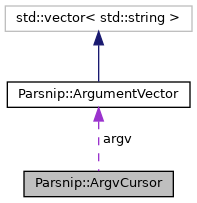
An iterator for argument vectors. More...
#include <parsnip_argv.h>
Public Member Functions | |
| ArgvCursor (const ArgumentVector *the_argv) | |
| ArgvCursor (const ArgvCursor &from)=default | |
| ArgvCursor (ArgvCursor &&from)=default | |
| ArgvCursor & | operator= (const ArgvCursor &from)=default |
| ArgvCursor & | operator= (ArgvCursor &&from)=default |
| bool | isStart () const |
| Check if the cursor is at the start of the command line. More... | |
| bool | isEnd () const |
| Check if the cursor is at the end of the command line. More... | |
| ArgvCursor & | operator++ () |
| ArgvCursor | operator++ (int) |
| ArgvCursor | operator+ (int value) const |
| ArgvCursor | operator- (int value) const |
| const ArgumentVector::StringType & | value () const |
| Return the current token. More... | |
| const ArgumentVector::StringType | remainingString () const |
| Return the raw, unsplit remainder of the command line. More... | |
| std::vector< ArgumentVector::StringType > | remainingTokens () const |
Private Attributes | |
| const ArgumentVector * | argv {nullptr} |
| ArgumentVector::size_type | point = 0 |
An iterator for argument vectors.
|
inline |
|
inlinedefault |
|
inlinedefault |
|
inline |
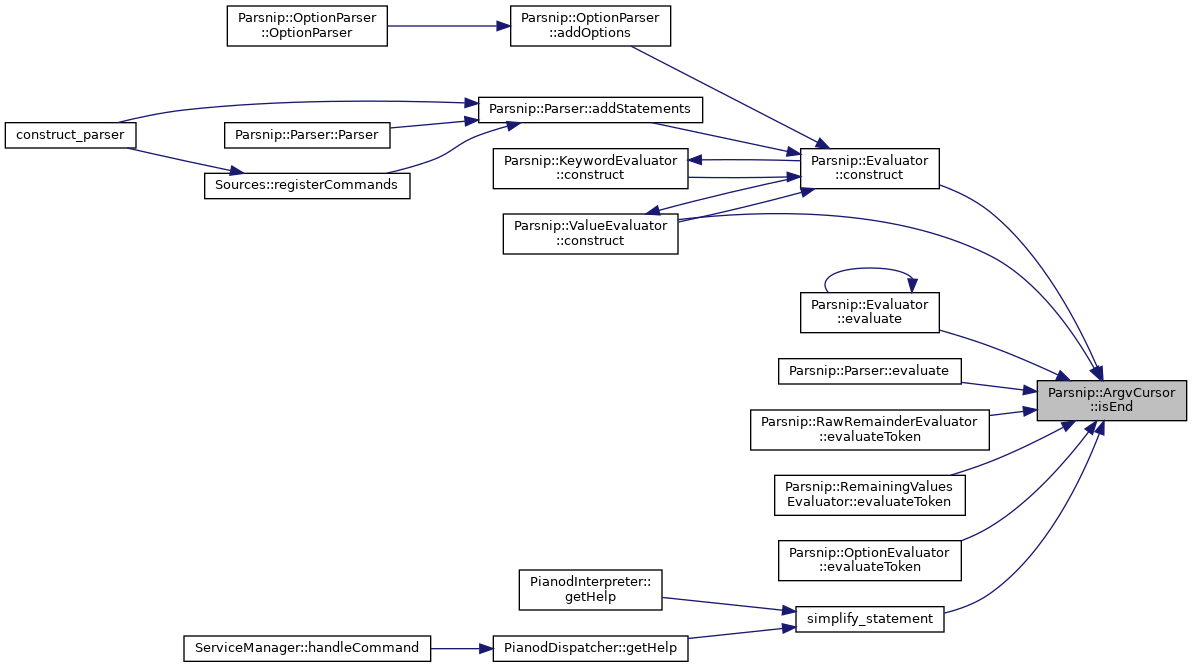
Check if the cursor is at the end of the command line.
|
inline |
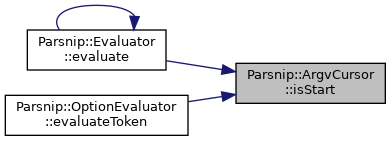
Check if the cursor is at the start of the command line.
|
inline |

|
inline |
|
inline |
|
inline |

|
inlinedefault |
|
inlinedefault |
|
inline |
Return the raw, unsplit remainder of the command line.


| std::vector<ArgumentVector::StringType> Parsnip::ArgvCursor::remainingTokens | ( | ) | const |
|
inline |
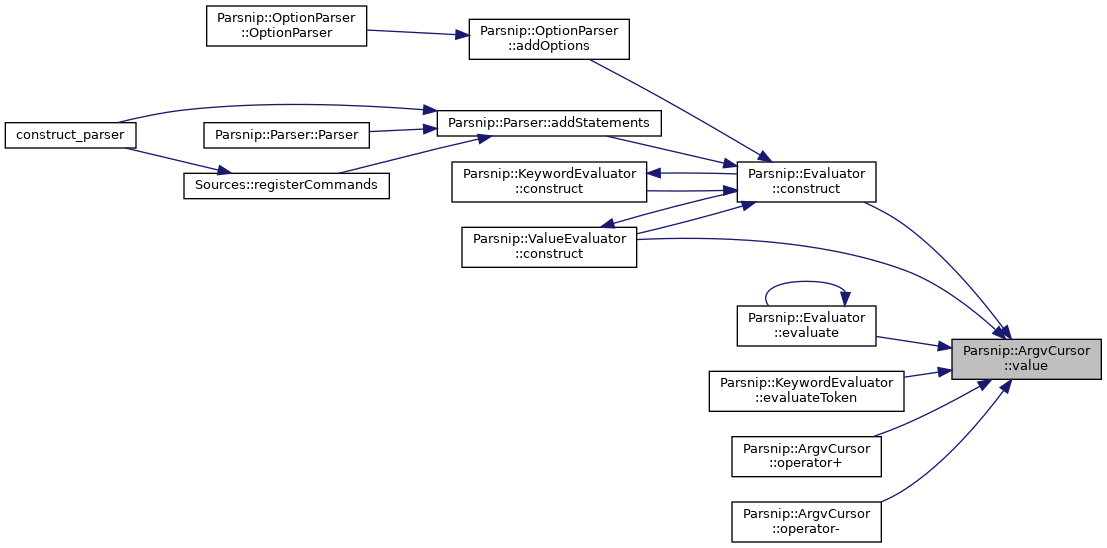
Return the current token.
|
private |
|
private |
 1.9.1
1.9.1